
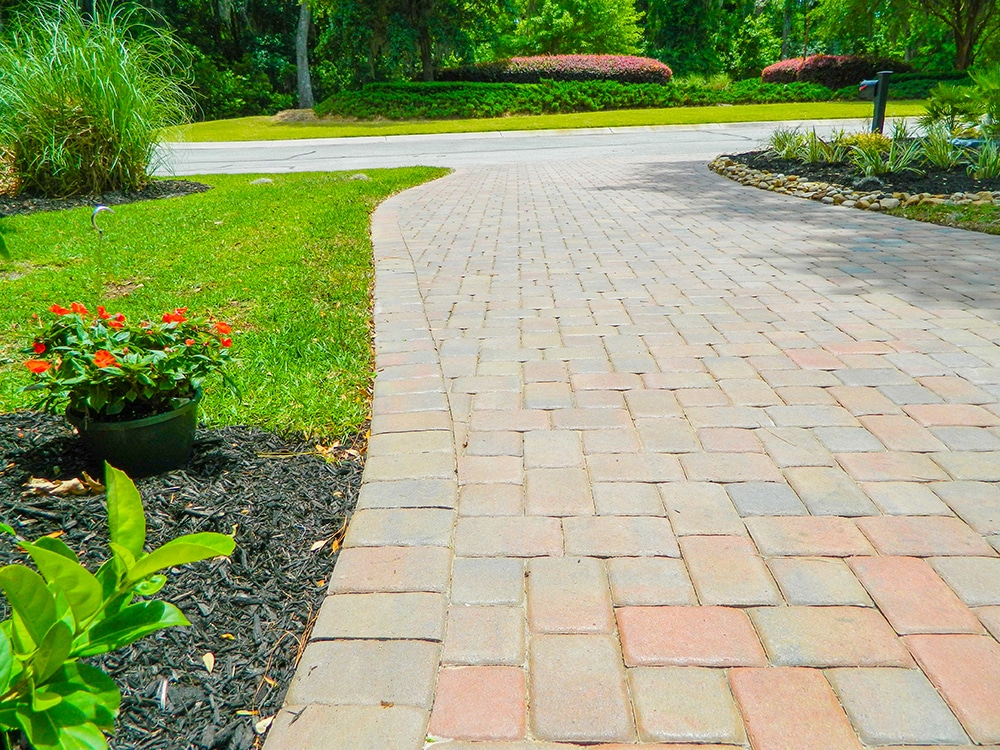
Whether you have a new patio, driveway, pool deck or other outdoor living space, Lowcountry homeowners have to weigh the pros and cons between poured concrete and pavers.
In Bluffton and Hilton Head specifically, homeowners often ask: Which lasts longer?
The answer, however, depends on several factors, including drainage, installation quality, maintenance, and how the space will be used. Bluffton and Hilton Head homeowners also contend with fickle coastal weather conditions, such as sweltering heat, humidity, heavy rain and occasional cold snaps, that can cause soil to shift and contribute to degradation of materials.
Concrete or pavers? The material you choose can significantly impact long-term durability.
Here’s a closer look at how concrete and pavers compare in the Lowcountry climate.
Concrete vs Pavers in Bluffton and Hilton Head Island: Understanding the Difference
Traditional concrete is a mixture of paste and aggregates (sand & rock) that is poured as one continuous slab. It creates a clean, uniform appearance and is often less expensive upfront.
Pavers, on the other hand, are individual interlocking units installed over a compacted base with sand joints between each piece. Because they are installed in sections rather than as one large slab, pavers can flex and adapt to slight ground movement over time.
That difference becomes important in coastal South Carolina.
How the Lowcountry’s Climate Impacts Outdoor Surfaces
When it comes to outdoor hardscapes, Bluffton and Hilton Head Island area presents unique challenges:
- High humidity
- Heavy seasonal rain
- Sandy and shifting soils
- Intense UV exposure
- Salt air near coastal areas
- Occasional freeze-thaw cycles
Rigid concrete slabs are more likely to crack as soil shifts or moisture expands and contracts beneath the surface. Interlocking pavers are designed to move slightly without major structural damage.
This flexibility is one reason many homeowners searching for concrete vs pavers in Bluffton and Hilton Head Island ultimately choose pavers for long-term performance.
Which Lasts Longer?
Concrete Lifespan
A professionally installed concrete patio or driveway can last roughly 20 to 30 years with proper maintenance. However, cracks are common over time, especially in climates with soil movement and moisture fluctuations. Repairs can also become noticeable because patched sections rarely match perfectly.
Stamped concrete may initially look attractive, but fading, cracking and surface wear often become more visible with age, according to Better Homes & Gardens.
Paver Lifespan
Well-installed pavers frequently last 30 to 50 years or longer. Because the system is modular, individual pavers can be repaired or replaced without tearing out the entire surface.
For Lowcountry homeowners, that repair flexibility matters. Tree roots, drainage changes, erosion, and settling are common in coastal environments. If a section shifts, pavers can often be lifted, re-leveled, and reinstalled rather than fully replaced.
Cracking: The Biggest Difference
Concrete almost always develops cracks eventually. Even properly installed slabs include control joints because cracking is expected as concrete cures and ages.
Pavers work differently.
Because each unit is separate, pressure is distributed across many smaller pieces instead of one large slab. This helps reduce major structural cracking and makes repairs more manageable.
In Bluffton and Hilton Head Island, where the ground can shift with moisture and temperature changes, this is a major advantage for driveway pavers and patios.
Drainage Matters in the Lowcountry
Drainage is a unique problem for new home construction and renovations.
Heavy rain is common throughout coastal South Carolina, and standing water can shorten the lifespan of outdoor surfaces. Paver systems naturally allow water to move through the joints and away from the surface more effectively than standard concrete slabs.
Proper drainage can help reduce:
- pooling water
- Erosion
- Washout
- slippery surfaces
- premature cracking
For this reason, many homeowners looking for *driveway pavers Hilton Head* prioritize professionally designed paver systems over poured concrete.
Maintenance Comparison
Concrete Maintenance
Concrete typically requires:
- sealing every few years
- crack repair
- pressure washing
- possible resurfacing
Once large cracks appear, repairs can become expensive and visually obvious.
Paver Maintenance
Pavers may occasionally need:
- joint sand replenishment
- sealing if desired
- weed prevention maintenance
- minor leveling repairs over time
However, damaged sections are usually easier and less expensive to fix because individual pavers can be replaced.
Appearance and Design Flexibility
Concrete offers a simpler, more uniform appearance.
Pavers offer significantly more design flexibility, including:
- multiple colors
- Textures
- Patterns
- Borders
- custom layouts
- luxury finishes
That flexibility makes pavers especially popular for:
- outdoor kitchens
- pool decks
- fire pit areas
- luxury driveways
- upscale outdoor living spaces
In communities throughout Bluffton and Hilton Head Island, pavers are often associated with higher-end curb appeal and outdoor design.
Which option is better for Bluffton and Hilton Head homes?
Both materials can work well when professionally installed, but for long-term durability in the Lowcountry climate, pavers often outperform traditional concrete.
Pavers are generally better suited for:
- shifting coastal soils
- heavy rain
- drainage concerns
- repair flexibility
- long-term appearance retention
Concrete may still make sense for some homeowners depending on budget, design goals, and project size.
The key is proper installation. Even the best materials can fail prematurely if the base preparation, grading, and drainage are not done correctly.
Planning a Patio, Driveway, or Outdoor Living Space?
Porch Masters & Quality Hardscapes helps homeowners throughout Bluffton and Hilton Head Island design custom outdoor spaces built for Lowcountry living.
From paver patios and walkways to screened porches, driveways, retaining walls, and outdoor living areas, our team focuses on craftsmanship, durability, and long-term value.
If you’re comparing concrete and pavers for your home, we can help you choose the right solution for your property, budget, and lifestyle. Contact us today!